
Lawn Renovation Geelong — When and Why to Do It
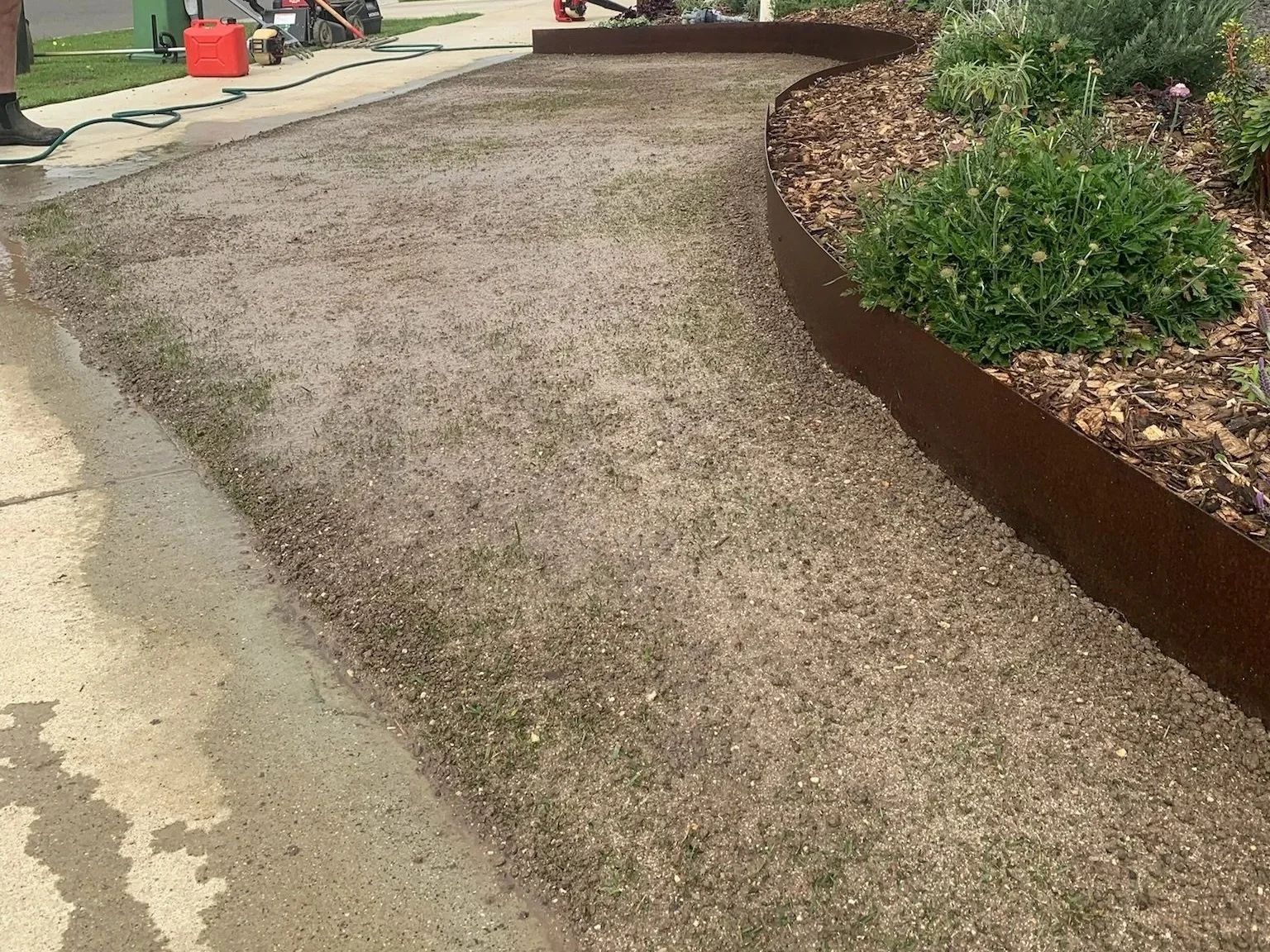
If your lawn has been looking rough for a while patchy in some spots, thick and spongy in others, not really responding to a regular mow the way it used to, it might not need more watering or fertiliser. It might need a renovation.
Late winter is the right time to do it in Geelong. Here's why, what's involved, and what to expect when it's done.
Signs Your Lawn Needs More Than a Regular Mow
A standard fortnightly mow keeps a healthy lawn looking sharp. But some lawns reach a point where maintenance alone isn't enough. The signs that you're there:
Thatch buildup. That spongy, springy feel underfoot means dead organic matter has built up between the soil and the grass surface. Thatch blocks water and nutrients from getting to the roots, so even a well-maintained lawn starts to suffer.
Bare patches that don't fill in. If you've had patches for more than one growing season and they haven't closed over on their own, they won't. The lawn needs help.
Weeds taking hold in thin spots. Thin, weak grass is an open invitation for bindii, clover and broadleaf weeds to move in. Renovation thickens the lawn back up and closes those gaps.
Scalpy, uneven surface. Years of growth and thatch leave lawns lumpy and uneven, which makes mowing harder and the finish worse.
If two or more of these apply, a lawn renovation service is the most efficient fix. Patching problems one by one usually costs more time and money than doing it properly once.
What a Lawn Renovation Involves
A proper lawn renovation follows a sequence. Here's what the steps look like:
Scalp mow The lawn is cut very short — much shorter than a normal mow. This removes excess growth and exposes the thatch layer underneath so it can be cleared.
Dethatching A dethatcher (also called a scarifier) is run over the lawn to rip out the accumulated dead material between soil and grass. This can look brutal in the moment — the lawn comes out looking pretty rough — but it's necessary. You can't overseed effectively into thatch.
Overseed or topdress (where needed) For couch, kikuyu and buffalo lawns common in Geelong, overseeding is often used on bare or thin patches to get coverage coming back fast. Sandy topdressing can also be applied to level the surface and improve drainage.
Fertilise A starter fertiliser goes down to support the new growth coming through. Getting nutrients into the soil at this stage is critical to how quickly the lawn recovers.
Water and wait The lawn needs consistent moisture for the next few weeks while the new growth establishes. This is the part that requires the most patience.
Why Late Winter Is the Right Time in Geelong
Timing matters more than people realise. The logic is simple: you want the lawn to have maximum growing season ahead of it to recover and fill back in before it's under stress again.
In Geelong, late winter (August into early September) hits that window correctly. Couch, kikuyu and buffalo grass are warm-season grasses that go dormant over winter and start actively growing again as temperatures lift through September and October. Renovating now means the lawn goes into that growth phase with thatch cleared, bare patches seeded and fresh nutrients in the soil. The result is a much fuller, more even lawn by November.
Renovating in summer is a mistake as the heat stress on a just-scalped lawn can set it back badly. Autumn is too late for warm-season grasses to fully recover before winter dormancy sets in again.
What to Expect Afterwards
This is important to know before you book: a freshly renovated lawn looks terrible for two to four weeks. The scalp and dethatch leave it looking thin and rough. That's normal and expected. What you're watching for from week two or three onward is new growth coming through the bare areas. By week four to six in good conditions, the lawn should be visibly filling back in.
After that, keeping up with a regular mow schedule holds all the work in place.
Quick Reference — Geelong Lawn Renovation
Scalp mow - Removes excess growth, exposes thatch
Dethatch - Clears dead material blocking roots
Overseed / topdress - Fills bare patches, levels surface
Fertilise - Feeds new growth coming through
Water consistently - Keeps seed and new roots alive
Best time in Geelong: August to early September Grass types renovated: Couch, kikuyu, buffalo Recovery window: 4 to 6 weeks to see visible improvement.
Thinking About Getting It Done This Spring?
If the lawn has needed attention for a while, now is the window. Lawn Sorted offers lawn renovation services across Geelong, Armstrong Creek, Mount Duneed, Torquay and surrounding suburbs. We assess the lawn before we start, tell you exactly what's involved and give you a fixed price before we touch a thing.
Lawn Sorted is a local Geelong lawn mowing and garden maintenance business. We service residential, rental and commercial properties across Greater Geelong and the Surf Coast.
